Top of mind bottom feeders and how their spam email tactics can suck blog from Brand Communications and Optics Strategist Loren Weisman.
Top of mind bottom feeders
You have probably heard the phrase: “Stay at the top of your audience’s mind” at all times.
And all these hype type Business coaches and executive consultants love to repeat it as if it’s the ultimate marketing truth.
But here comes the problem…
Many have twisted this advice into something counterproductive. Instead of providing value, they flood inboxes with constant, repetitive, low quality content in a desperate attempt to stay “top of mind.” I call them Top of mind bottom feeders.
It reminds me of those old movie scenes…
(before everyone became hypersensitive and so easily triggered)
where someone tries speaking to a person in another language by just getting louder and slower, as if volume alone will make the message understood.
That’s what seems to be happening with email marketing today.
More noise, less meaning… an excess of hype and less authenticity.
A Big Part of The Problem: Overkill and Over sending in Email Marketing
You click on an ad or sign up for a free resource.
The next thing you know, you’re getting the daily emails…
and even sometimes seven days a week.
What’s inside of so many of the emails from those Top of mind bottom feeders?
AI-generated filler content
Sales pitches not even cleverly disguised as valuable insights
Regurgitated blog posts, just slightly rewritten with empty call to actions and weak hype.
These approaches don’t build trust or deepen connections. They can do the opposite:
Trigger unsubscribes
Get your email marked as spam
Damage your brand reputation
And sadly, some businesses even keep sending emails after you unsubscribe, breaking both etiquette and compliance rules.
Consider Flipping the Script on the top of mind bottom feeders:
Go for Quality Over Quantity
If you want to be top of mind, you don’t need to send an email every single day. In fact, less really can be more. And perhaps in honor, space, patience and authenticity, you can create better engagement.
Offer subscription preferences: weekly, monthly, or “special announcements only.”
Clearly state how often you’ll email and actually stick to it.
2. Prioritize Value Over Volume
Have every email including something new worth reading or acting on.
Avoid generic AI output. Use it to assist, edit but not replace your authentic voice.
3. Think Long Term Relationships, Not Quick Wins
Let customers come to you naturally, like passing by a product in a store multiple times before deciding to buy and seeing how you might be different from all the yell tell sell types.
Give them space to stay curious instead of overwhelming them with pitches.
In retail, shoppers often see a product several times before they decide to purchase. That repeated exposure can work because it’s subtle and not as intrusive. As they back their products with different ad buys and ideas to engage.
The same can go for email:
Consider Spreading out your communication over bombarding too often.
Make each piece original and worth opening, not just glorified click bait.
Avoid the “same email, slightly altered” trap and hype of those top of mind bottom feeders.
if you don’t have anything to say, send or share… just don’t send anything then!
When people look forward to hearing from you instead of dreading another email, pitch or push your engagement rates may just skyrocket.
Being “top of mind” isn’t about shouting the loudest or showing up the most. It can be about showing up meaningfully, authentically and respectfully. Consider honoring your audience’s time, intelligence, and attention.
If your emails are authentic, authoritative, and genuinely useful, you may not need to force yourself into someone’s inbox every day. They might just invite you in and be that much more open to your product, service or offer… and that’s the kind of connection that can lead to real, long term customers.
Fake Authors Using AI. Podcast Links and Transcription for Wait What Really OK Podcast Titled “Fake Authors Using AI: Examining the false authorship trend.”
Fake Authors Using AI.
Podcast Links and Transcription
Fake Authors Using AI, Examining the False Authorship Trend.
***
Fake Authors Using Ai Chapters:
00:00 – Introduction & Theme Song
00:20 – Host Introduction: Loren Weisman
00:28 – Dishonesty in Modern Publishing
01:11 – AI Book Writing: Real Authorship or Not?
01:26 – Fake Authors Using AI: Speedy AI Prompts & Ethics
01:41 – The Integrity Crisis in Self-Publishing
02:04 – Transparency in Writing & Book Creation
02:34 – The True Author’s Road: Time & Effort
03:12 – Using AI Ethically for Editing and Proofreading
03:39 – Algorithmic Writing vs. Real Human Craft
04:10 – Copyright and Ownership in AI-Generated Books
04:34 – Fake Courses: AI Content and Deception
05:15 – Businesses Seeking Dishonest Creators
05:44 – Transparency in Marketing & Education Products
06:27 – The Authority Problem: Real vs. Fake Experts
07:05 – Human Input, Editors, & Authentic Voices
08:13 – How the Term “Author” Is Losing Validity
08:35 – Prompters vs. Real Writers
09:29 – Public Normalization of AI Cheating
09:56 – Be True to Yourself: Preserving Authority
10:37 – Identifying Fake Experts & Coaches
11:44 – Anthology & Mass Authorship Scams
12:21 – Questionable Motives in Content Creation
13:10 – Why Prompts Don’t Equal Authorship
13:31 – Ethical AI Use: Sharing Your Process
13:59 – Creating Real, Original Content
14:49 – The Ethics of AI in Content Creation
15:59 – Spotting Fake Experts Through Social Media Surges
18:02 – Evaluating Whether an Author Is Real or AI
19:40 – AI Detection Advancements & Accountability
21:18 – Transparency & Integrity as Competitive Advantages
23:59 – Real Authorship: Blood, Sweat, and Tears
25:49 – Final Advice on Honor, Truth, and Professionalism
***
Fake authors using ai transcription
Fake Authors Using AI Transcription
Song:
Wait What Really OK, OK. With your host, Loren Weisman. This is a fully licensed theme song for the show about stuff that makes you say, Wait What Really OK, OK.
Loren:
The state of publishing, writing, and putting out a book to me has become terrifyingly dishonest. And right now, in this time of dishonesty, there are more and more companies using AI models that allow for these books to be written, as they even profess, in minutes. One of the strangest issues that I notice with it and that I have with it is how incredibly popular these ads are on sites like Instagram, where it’s not just the ad.
And, yeah, okay, there’s a whole bunch of fake people saying, oh, wow, this is really neat. This is really neat. But people saying, real people with real profiles saying they’re genuinely excited about this. The fake authors using ai problem shining bright.
They’ve always wanted to do something like this. They’ve always wanted to write a book. But you’re not writing a book. You’re adding in a prompt. Some of them claim that you can set up a prompt in two minutes and then have a complete book. Some of these ads, they’re stating, oh, just go in here, add this prompt. You’ll have this. You’ll be able to upload it. You’ll be able to go out with your friends and have lunch. And now you’re an author.
I find that pathetic. I find it to be dishonest.
And as someone that I would consider myself a real author, it makes me not want to tell anyone I’m an author anymore. For all these people that are out there saying, oh, you’ll be able to tell people you’re an author, would you.
Would you be that honest with it? Would you share with someone exactly how you wrote your book? Would you put on the front and the back a little note stating below by your name that I did a prompt, I filled out a couple questions, I added this part, and then AI wrote it for me, that you are one of those fake authors using ai.
Most people, probably not, and yet so many are out there doing it. I’ve authored three books of my own. I’ve helped from a messaging standpoint on a series of other books. It’s a long process, and people saying, it doesn’t have to be that long. It can be done in minutes.
I was proud of my third book, which I knocked out in just a little shy of four months, that also included, on average, four to five hours of writing on a given day, five days a week, as well as going back and forth with the editor and the proofreader and legal and all that stuff and not saying that Other people shouldn’t be involved in a book.
Fake Authors Using AI Transcription Continued:
You should. And it’s not saying that AI can’t be involved in a book. It can be. You could give certain stuff to A.I. for a developmental edit. If you’re being honorable, that is, you could give stuff to A.I. for the grammatical. You could use some of these A.I. systems for proofreading.
You could use some of these AI systems for legal aspects of compliance. You could use AI in a series of ways. That doesn’t take away from the validity if you actually wrote the book. And yet this is being bypassed now inside of algorithmic learning, it’s not necessarily artificial intelligence, but algorithmic learning. For you to put in such a simplified pattern or answer just a couple simple questions, and then all of a sudden you have a book. How does the copyright work on that for the fake authors using ai?
You know, are you sharing? Are you honestly sharing a copyright? Would you to state, okay, well, you know, I wrote this with this given site or this given model. I mean, the same thing could be said for these courses, too, these fake courses where it’s fill in, oh, this stuff is easy. It’s 10 minutes of filling these things in, and a course will be created for you. What a deceiving ripoff. If you can fill out something for five to 10 minutes and that in turn gives you a course that makes you look like an expert that you’re selling. I question your honor, I question your morals, I question your professionalism, and I question you as an individual.
And it’s so sad that there are so many companies that are looking for people, questionable people that will simply use their little model, flip this thing through. And in a sense, they’re looking for liars. They’re looking for people that are happy to deceive. They’re looking for people that will use their information. Oh, they’ll scrape pieces from here and from there and maybe even from a couple of these courses. Maybe you do learn a thing or two.
But would you share that with your students? So for your little. My $99.00 course, my $499.00 course, my. My, that course. Oh, and all the marketing with it, would you put right on that front page in that scroll down section and your special. And your discount, would you list. These were the questions I was asked, this is what was prompt, and then it was returned to me, and I packaged it, marketed it, and I’m selling it to you now. For those that, that have no problem with that, who am I to judge?
I have my feelings, I have my opinions on it. But to those out there looking for genuine authority, for those out there that are looking for genuine education, for those out there that are looking for real intelligence, it’s time to dig a little bit deeper and watch out from what you’re being presented and from what’s being presented to you and even those that have authority. There was one particular lawyer that had a. He had a book and a course. And this guy, I believe in some of what I heard from him, he definitely knew his stuff inside of family law.
But what he didn’t realize, or it seems he didn’t realize, was that he used one of these little course creators and it took away his authority and it turned it into fluff. And because it was probably a five minute prompt, it put a whole bunch of stuff in there that did not show the efforts to write a book means or used to mean you wrote it.
Yes, you would have editors. Yes, you would have, you know, people to proofread. You’d have technical editors, you’d even have developmental editors. My second book, there was an entire team at that publishing house to help make that book what it was. But the voice, the narrative, the message, the experience, the authenticity, the wisdom, the intelligence that came from me. And it was heartbreaking to write that book. It took a very long time. It was better part of. I say it was a better part of 12 and a half months of writing.
One of my books
Fake Authors Using AI Transcription Continued:
And then we went into the editing phases. Things had to get moved around. It was. There was a lot there. I wrote 1200 pages that got, you know, shrunken down into 478. And I needed help with that. And I had. There was an amazing, amazing guy. I still just, I. He took the time to read every single one of those pages. And it wasn’t the cheapest. It wasn’t the cheapest situation, because that’s time. It wasn’t just AI, but these days, like, you know, so there’s certain people saying, why don’t you share? Why don’t you lead a little bit more that you’re the author of these books?
Because the term author to me has lost so much of its validity and authority. It’s been dropped back. Because these people are calling themselves authors that are actually liars. They are prompters. They’ve prompted the idea of a book.
They’ve used an AI system that can then from that prompt generate stuff. And from that prompt you can state, who are you aiming for? And now it’s generating content that does not come from this individual. Oh, great. Maybe you even say, okay, well, I want your prompt and pull from a Whole bunch of my blogs on my website and blogs that you wrote. So it’s pulling certain information, but it’s still this, this initial process, the, the majority of the process is a lie.
Loren Weisman Cartoon
And that to me is so unfortunate. I don’t understand and I mean, I guess I don’t understand with a lot of the AI and I don’t understand how not only cheating, which at one point it was, let’s do it really quietly, has now turned into a thing where people are advertising how you can cheat. They’re advertising here, here’s the ways that you can do it. All you have to, all you have to do is this. You will appear as an authority.
And I kind of like that whole appear as an authority because in a way there’s a little honesty in the middle of this because you’re not an authority, you’re not an author if this is the system you’re using. And I think that if you’re using these kind of systems, it reduces your authority. Be true to you and look a little bit deeper. Look, you know, when you, when you see a book, if you’re not 100% sure about it, is all of a sudden this person, they were just doing this and doing that or they were this kind of.
Because I know this is very popular with that life coaching and the business consultants, oh, they’ve regurgitated so much crowd and there are many that have written books and they regurgitated it too. But search some of these chapter names, search the title, search the opening, the closing, see if that tone, see if it’s showing up anywhere else. Look at, I mean, you know, some of these people now and they’re stating, oh, you could put out a book a week.
Nobody writes a book a week. And even some of these larger scale authors, even some of the, you know, the romance authors of the, you know, when it was that supermarket buy the book, some of these people had their ghost writers, had their writing team. It was almost like the early stages of AI but it was with real people where it’s okay, you’re going to scope out the concept, you’re going to hand it to some other people, let them develop it, let them add to it.
It wasn’t really a developmental edit, it was really having a series of co writers and then bringing it back to the author. And the author had paid these other people and they zapped their name on it. The other one I can’t stand it doesn’t seem to be quite as popular these days. And I think the lack of the popularity Is because now you have the ability to make it all your own.
Is that book of 20 different authors on something which is somebody who’s trying to make a buck and say, oh, I’m going to promote you. It’s going to give you a great promotion. Write this little section here. I had people coming to me with some business books where they’re like, write this section. Here’s what you pay me, and I’ll put this in the book.
And it’s going to do great for your business. And I would say, I don’t want to be associated with some of these people you’re talking to. Oh, no, these are big names. I’m like, yeah, they’re frauds. Some of them are frauds. Some of them are hype machines. Some of them don’t know what they’re talking about. And yet you’re claiming it’s this authorship of all these people together.
No, it’s a product. Is it a product that you want to create to try to hype yourself? And if so, if a book is not in, you don’t write a book. If a course is not in, you don’t create a course. I don’t care. If you need money and you can’t organize your content, your expertise to be amplified in the best way possible for you, that you need to lie, cheat and steal, then it’s time to get another job. Or I guess with some of these people, it’s fine. Just do what you’ll do.
Think with a foundational transparency realize. And even with these AI things that they’re telling kids to use in college, use this. It’ll hide the AI writing we’ve come into this time on these sites like Instagram and these product models and these business models of here’s how you cheat. Here’s how you don’t get caught. Here’s how you create something amazing. Here’s how you become an author.
The last time I checked, becoming an author does not consist of creating a prompt and trying to sell people BS. And again, the option is there yet. Just because something is available doesn’t mean you should do it. Just because a whole bunch of other people you know that are doing it doesn’t mean you should do it. And maybe you can take some pride and maybe you can take just some, some foundational, ethical, moral, just honesty and be able to fire back and say, here’s how I used AI.
I used it for this part of the editing. Here’s how long it took me to write it. Here’s how much I wrote here’s where I got my help. I create. The bulk of my stuff that I’m putting out these days is more so videos and podcasts. I create a couple one minutes, three days a week. The other two days a week, I create the fuller length, but they usually stand at between 3, 4, 5 minutes max. I create those ideas. I’m not going to use some kind of trending software.
I’m not using a script thing from AI. These are my thoughts from my experiences. Now, once that video is done, I bring it into sites like Submagic and it automatically, with AI, creates the video, the captions. I also am a fan, a partial fan of Vidiq. Not for it to sit here and tell me this is what I have to film and this is what I should film. And here’s the latest trend. So just hop on this train. No, I like that. I can upload to.
I can upload to Vidiq a video I can upload. I can also add in and say, okay, here’s. Here’s the captions, here’s the script, here’s the point of what I’m going for. What would be some good keywords to add to that and add to the description? It’s the same thing with descriptions. I create my videos. I will say, okay, I have just created a video. This is what the video is. This is the title of the video.
Here is, Here is the. The transcription from the video. I’m looking for a couple keyword phrases that would be strong from what’s been created to amplify the marketing. And that feels completely moral and ethical and transparent to me.
I’m happy to share that with the world. While it’s strange that some people from the faceless YouTube channels to others that will go, okay, what’s trending? What’s hot? What do I need? Oh, gosh, I gotta write a script. Not anymore. You can click on it and Vidiq will do it, and some of these other ones will do it for you.
That’s not honest. Using AI as an editing tool, using AI to bring, to enhance or assist on authority, I find to be a moral, ethical thing. And it’s something that I have no problem sharing how I use it. To these people that choose to hide that, to these people that choose to deceive, to these people that use it so that it completely creates their content, all their authority, all their knowledge, because it’s built from somewhere else.
That to me, is dangerous. And that to me, it makes me wonder, you know, for the people that are looking into it. What is it? Not only are they scamming, but they’re. They’re holding themselves with no liability to anybody, no accountability. So if you start seeing somebody that just pops up out of nowhere, watch for some of the signs.
Do you notice that for all of a sudden they didn’t seem to have much going on? They had a couple blogs here, they had a couple posts here with social media, and then all of a sudden they’re drenched in social media. They have all these blogs coming out day after day after day after day. And many posts in a given day that might be AI, it might not be them.
Do they all of a sudden have they gone from never writing a book to all of a sudden they have five books in a series of months to all of a sudden having these courses that just seem to have come out of nowhere? Might be. Again, might be AI? Yes. There are people that are working and they’re putting together and they’re prepping certain stuff for a given launch, and that’s one thing.
But when all of a sudden the content, the courses, a series of books, a whole bunch of stuff seems to all of a sudden come into play, that fake authors using ai red flag can go up, that might have been the time when they signed up for their little subscription, they paid their little fees, and they’re in full exploiting mode of you don’t get caught in trying to buy into the hype.
That is not true. And even inside of some of this, you may notice, see if you can get something where you can test out and read through it. Does it look like it’s just a call to action?
There’s one individual I worked on with a book and I stepped away from working with him because at first it was truly a stewarding, gifting, intelligent book from an amazing individual that had great knowledge and great experience.
But then he turned it into a call to action. Everything was a call to action about that book. And it’s not saying that a book can’t promote your authority, but I don’t believe a book should create your authority. And I don’t believe that a book needs to be a call to action. From that book, if someone gets a good enough sense, wow, well, this is who he is.
This is how he does it.These are his experiences.This is a sense of him.
Fake Authors Using AI Transcription Continued:
Okay, great. But if in a chapter three different times to learn more. Oh, to learn this. Oh, to get this, you just got to work with me. Oh, you just sign up here. Oh, just, oh, pay me this then. It’s not a book, it’s an ad pamphlet in My opinion and for you, for the individuals that see these things, yes, I get it. It can be enticing.
It’s kind of like, you know, sugar candy of like, I’ve always wanted to have a book. This scam site says I can have a book. I think deep down most people know that, wait, I’m going to be an author in two minutes.
Fake Authors Using AI Transcription Continued:
They know that there’s something wrong with that. The fake authors using ai, slowly being exposed… Go with your gut, think about it, pray on it. Stand on a foundation of truth and transparency. Because as you build, as AI gets smarter, AI is also beginning identify more and more the fakes. And for people saying, oh, well, we’re able to hide this AI.
We’re able to hide the AI writing, more themes, more patterns are showing up, more is coming out. Are you prepared in your business, with your product, with your service, are you prepared to go truly transparent for who you are, for what you know, for where you learned it, for the knowledge, the wisdom, the discernment that you’ve grown?
Does it prove out or did it magically appear overnight because of an AI system? Did you hire some kind of marketing AI thing to give off the appearance, or did you genuinely go and learn these things? It’s even awful. You know, some of these colleges, you don’t need to go this long. You don’t need this long to get this master’s. How do you know this individual might need that? It’s looking in and it’s vetting and it’s digging deeper and it’s choosing the path that you want to go. In the end, it is your choice.
There are more options now than ever to lie, to deceive, to cheat, to steal, to rip off, to appear as something that you are absolutely not.
But there’s also, in the middle of this honesty, there’s integrity. There’s the ability to stand out and shine like a bright, beautiful light of truth, of love and of transparency, of being able to share transparency. Hey, this. You know what? I did use AI, but I used it this way. Here’s what I did to create this.
Here’s how long it took me to write the book. Here’s how I wrote it. Talk about those things. Showcase so that you can share. If you’re going the moral route, if you’re going the transparent route, so you can be seen differently in a sea of fakes, in how you stand and how you wrote, in where the book came from, in where the experiences happen, in how you put this together, having that little story that may end up being a series of videos, it may end up being a series of blogs, a post of pictures of the process, of the time, track it.
When did you first sit down and start writing?
When did you. When did you stop?
I’ve been writing something. It’s a. It looks like it may be another book for me. It started off not intentionally at first. It was. I’m just going to get this out to now becoming something that goes like, okay, this, this may be a book. This may be a book for a side of the story that I feel I want to have seen.
And I’ve gotten to the point where it was started in June and the last I wrote the opener and the closer, I guess you could call it opening and closing thoughts for the whole thing this morning and in that may be my next book.
I’m not sure yet, but I can state, here’s what I did, here’s how I worked on it, here’s how I created it, here’s how. Here’s the process, here’s the dates, here’s the timeline. I’m going that extra distance right now to showcase this came from me and did not come from a prompt or an AI system or some cheap software thing. That this is me. I am not one of those fake authors using ai.
And that’s where I want to leave you with this one. Be you if you’re going to be honorable, if you’re going to show that integrity to stand out against this sea of lies, of deception, thievery, false fronts and fake people and even those with some authority but trying to shortcut, share how you didn’t.
A great deal of your marketing and your message and part of that narrative can be shown in how you did it to prove that you did it and in that how much better would it feel to be able to say no, you know, oh, this guy’s an author and this guy’s. Are they. I can’t say if they are. I can’t say if they’re not. But I can tell you this is the blood, sweat, tears and time that I put in. And with anything that’s worth anything, it is blood, sweat, tears and time.
And while they claim and many of these fake false flag companies and scam artists, oh, you just do this in two minutes. Somewhere deep down, I believe everyone knows it’s fake, it’s wrong, it’s untrue, and it’s a way to make a quick buck. And I’d like to see, I’d like to see, you know, accountability on that. I like to see that if you had to use those things that you would not be allowed a copyright or it would have to be stated somewhere in the book what this was and how it was created.
That’s not coming anytime soon.
But at the same time, for you to counter and be able to tell the truth of your process, your system, how you came to get from point A to point B and the details in there, then in that transparency, you’re blowing the others out of the water and you’re showcasing the truth of you, the truth of a book, of where you stand, of what you have for experiences and, and what you are capable of over so many others that have so little capability to do anything that they’re looking for any way to appear as something they’re not. And they don’t care how it could come off. If they’re lying, if they’re deceiving, if they’re cheating, as long as they can make that quick buck and hold no accountability in the moment, they’re thrilled.
Shame on them.
And instead of being like them, consider standing in honor and transparency as you be true. Be true to you. Be true to the audience that you may want to build or that you’re trying to build. I believe it makes all the difference in the world and really highlights who you are as a person and who you would share that with.
I mean, the last thing I’ll say, would you tell a daughter or a son, this is how you created a book. Would you tell a family member? Would you tell somebody that you look up to. This is what you did and this is the process that you did. And if you don’t feel comfortable or there’s something tugging or nagging, then why do that to the public at large?
Fake Authors Using AI Transcription Continued:
Honor yourself. Be true, be transparent, be professional. Even in a world where everyone is saying you don’t have to and you can go the other way, take that route that a little less people are going through, go through that gate that’s a little skinnier than the other one. It’s something that may allow you to be a little bit more proud of the achievement of what you create and how you created it. So that’s about it. That’s my rant on this one.
Maybe a little more emotional than it needs to be, but that’s where I stand on this. This new practice of the. The two minute prompted book and the type of people and the choices that people are making right now to appear as so much more, while in a sense it only amplifies how much less they are as a person. Wait What Really OK, OK.
Top 100 Loren Weisman Quotes: Considerations for Branding, Communication and Marketing
Top 100 Loren Weisman Quotes:
Considerations for Branding, Communication and Marketing
To get a little more of an idea of me, where I come from, what I believe and how I work… I am sharing 100 of my quotes from the last few decades that have appeared either in some of my books, on my website or articles.
I hope this gives you a sense of me, my views and my approach.
Here’s to hoping you might find one or two of them helpful.
I hope some of these quotes can be a resource you return to whenever you need a boost in mindset or strategy.
Ten Themes of the Top 100 Loren Weisman Quotes:
Broke these quotes out into the ten themes or topics below…
Foundations of Brand Messaging & Strategy
Authenticity, Authority & DifferentiationStorytelling and Content CreationMessaging, Delivery and EngagementClarity, Truth and ProfessionalismPersonal and Professional GrowthIntegrity, Honor and EthicsCommunication, Respect and RelationshipsOptics, Perception and Social MediaEndurance, Harvest and Long-Term Vision
Foundations of Brand Messaging and Strategy Quotes
Top 100 Loren Weisman Quotes
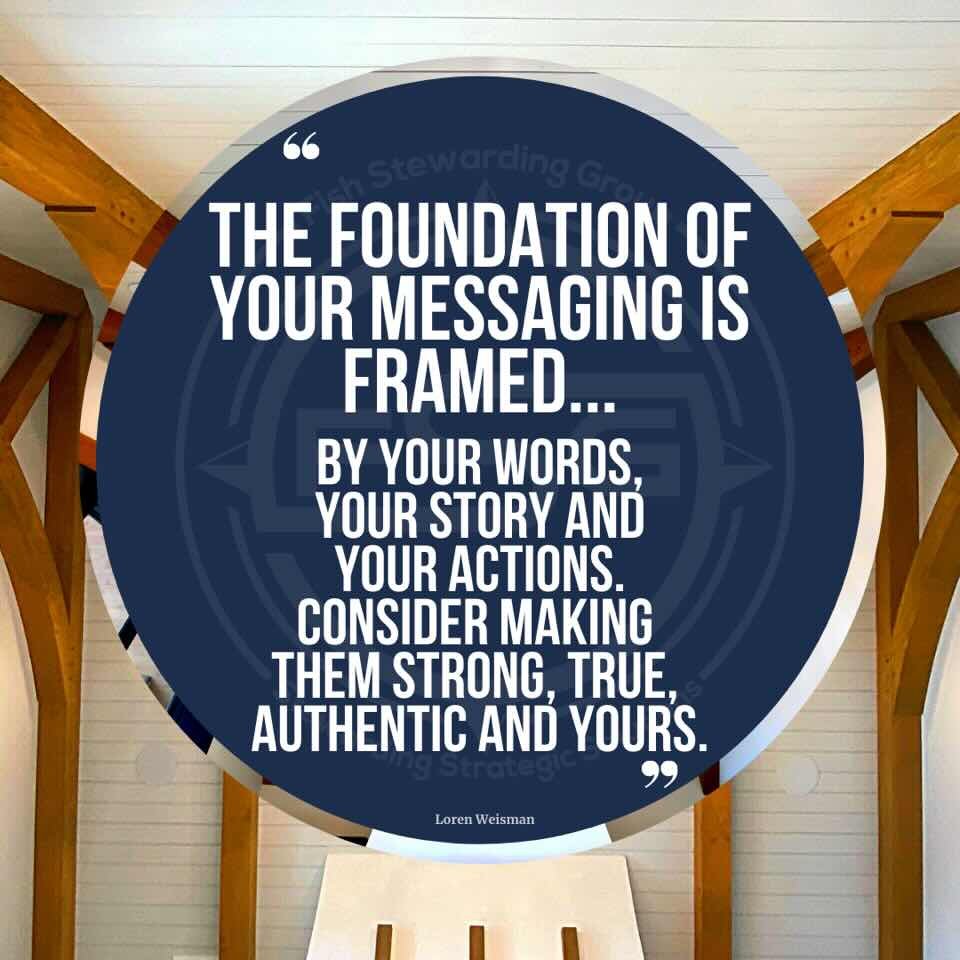
1. The foundation of transparent messaging is often framed by your words, your story and your actions. Consider making them strong, true, authentic and yours.
2. I believe in the discovery, validity and security of a brand and its messaging being built on a foundation that is stabilized for enduring growth. Regardless of the field or product, when these key elements are reviewed and addressed, the accountability, authenticity and authority can shine that much brighter.
3. For me, a first step, with any business, venture or visionary is to bring them through a personalized organizational strategy plan in order to create the right foundation for all to be built on or corrected.
4. Perceptions, comparisons, compliance and connotations of the messaging and optics of a brand can matter a great deal. Consider taking the time to choose a sound foundation for the name, the content and the tone for a secure, stable and persevering performance.
6. I think the messaging has to come before the marketing and the discovery of the brand. This can allow the foundation of what it will be built on, to be understood as much as possible by as many people as possible.
7. I believe Messaging isn’t marketing. To me, Messaging comes before marketing.
8. When marketing is not grounded in a foundation of authentic messaging with authority, integrity and ability, it can end up costing worlds more, saying worlds less and sounding the same as so many others.
9. Shortcuts on the foundation of your discovery, compliance, brand, website, uniformity, competitive, comparative as well as your core messaging are a dangerous and often become the most costly route to go.
10. Premature promotion and distribution before professional protection and organization can lead to loss of control, ownership and profits. Consider creating the sound foundation before you start building the floors above it.
11. Consider building your foundation so strong and secure that everything placed on top of it can be supported and set up to thrive and succeed that much more.
12. Brand before liftoff. For the best launch, the farthest reach, and the most results, consider building the brand foundation and fueling it while it is still on the launching pad. In many cases, designing a brand after you take off is like fueling a rocket after its lifted off.
13. When you run across the operational touch points, the strategic touch points, the core time frames, and the messaging simultaneously; It can allow for a sound foundation to be heard above the unison and harmonies of so many others saying the exact same thing at the same time.
14. Consider Discovery and blueprinting before building… Messaging before marketing… And engaging before selling.
Authenticity, Authority and Differentiation Quotes
Top 100 Loren Weisman Quotes
15. The authenticity in your story, the authority in your delivery and the personalization of your presentation can make you that much more real and able to reach that many more people.
16. Authenticity in the direction, delivery, authorship and performance of a business or brand can create a greater path of awareness, presence and profit.
18. The authenticity in your story, the authority in your delivery and the personalization of your presentation may help you appear that much more real.
19. Consider exchanging the claims, promises and guarantees for authentic, humble and engaging content.
20. Consider nourishing your audience with authentic content that highlights your authority instead of feeding them junk click bait in attempts to grow a false popularity.
21. No one can create your brand for you. No one can create your story for you. To be authentically created, this has to be done with you, not for you.
22. If you say the same things as everyone else… share the same links as everyone else… post the same quotes as everyone else… and put up the same pictures as everyone else… Why should anyone think you are any different than everyone else?
23. If you are… saying the same things as everyone else… sharing the same links as everyone else… posting the same quotes as everyone else… and putting up the same pictures as everyone else… Why should anyone think you are any different than everyone else?
24. Consider being drawn to individuals showcasing and sharing authenticity, authority, experience and knowledge, while being less concerned with who someone is standing next to.
25. Amplify with your authority instead of constantly shouting only publicity. A sell only goes so far. Your experience, knowledge and authenticity can create the endurance to engage and sustain a connection.
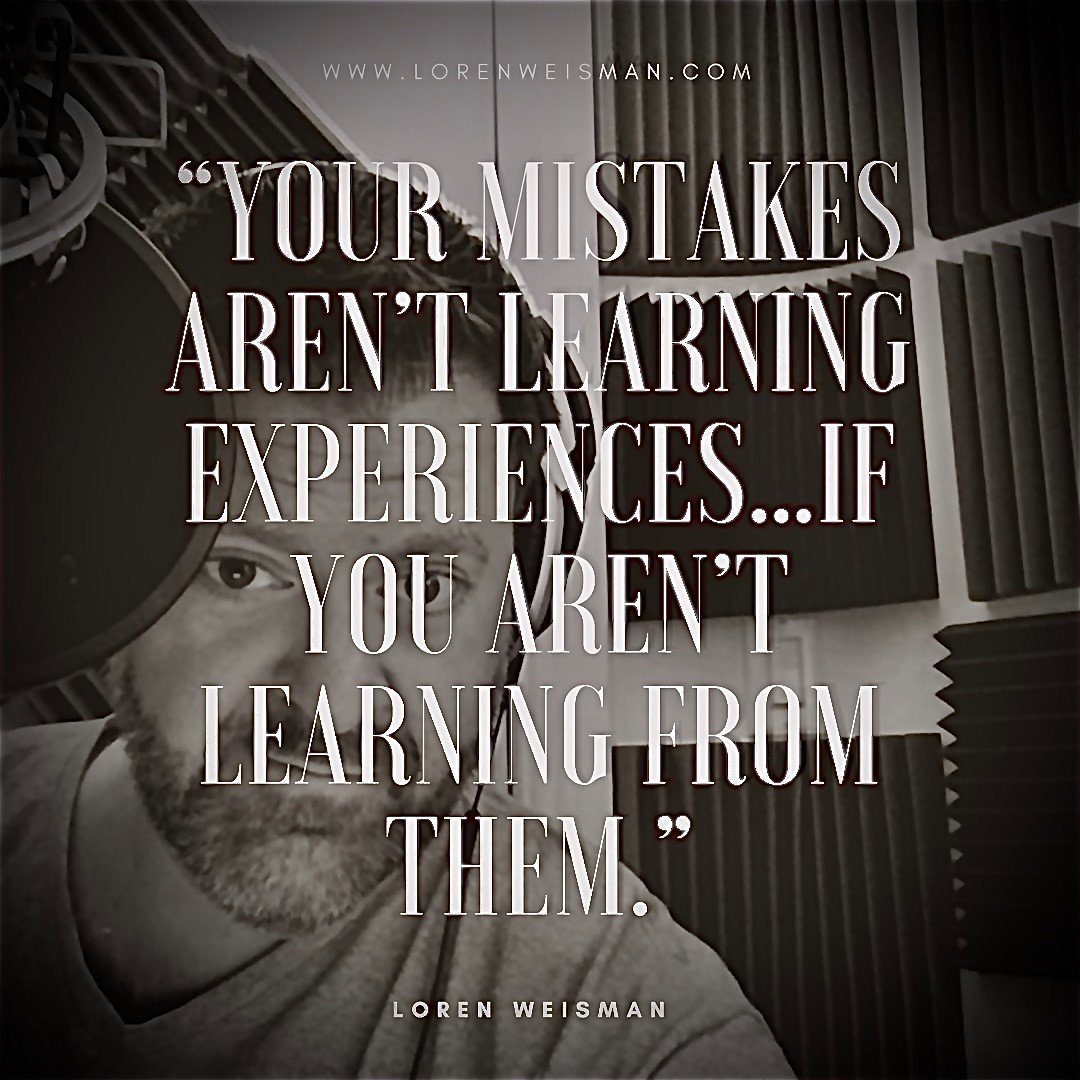
Your mistakes aren’t learning experiences if you aren’t learning from them.
Storytelling and Content Creation Quotes
Top 100 Loren Weisman Quotes
26. There are hundreds of ways to tell a story and thousands of ways to tell different parts of a story. Still, be sure you have your story and the foundation of its messaging solid, situated and clear before bringing it to a public containing a large number of people with short attention spans that tends to read only headlines.
27. Spread your story and messaging out, over time, and over different types of media in short segments that invite people to learn more with out force.
28. Creating authentic messaging with your story allows for the strategy, products, and security to come together correctly and create a melody that may be heard over the same old harmonies sung by everyone else when they use hype scripts instead of true life.
29. In painting a palette with a wide array of information, before painting the picture of your brand… it can allow for the tone, temperature and clarity of your brand, messaging and process architecture to all come together in harmony at the same time.
30. By thinking about gearing the message across the existing customer, the familiar with you but has not converted person and the individual that has no idea who you are… (your three audiences) with the same content, you may be able to build a greater bond, better relationships, and an endurance audience.
32. Consider posting content that plants authentic seeds for an enduring harvest instead of posting empty hype that lasts only for a moment.
33. Is that content for the present, past and future? Consider simultaneously strategizing your content creation to deliver a resonating endurance impact for the present, future and past.
34. Content without continuity and connection can leave you with fewer conversions, sales, and engagement. Consider not trying to create something to go viral and instead start building an authentic connection rooted in endurance and engagement.
35. Your story, shared with authenticity can do more to sell you than any sales pitch, marketing piece or ad.
36. Instead of trying to shake 20 hands, get 30 business cards and adding 40 people to your LinkedIn, consider taking the time with authentic introductions and conversations that are grounded in connection quality over racing for the quantity of stale and rushed connection attempts.
37. For your own professionalism, reputation & appearance, it really is ok to NOT post every video, picture, event or show on social media. On the contrary, holding back, waiting or not posting certain things altogether can help much more than hurt.
38. Would you be worried for someone to see or hear… that picture, video, blog, quote, audio or rant… tomorrow, next week, next month, next year or in five years? Then perhaps, don’t post it today.
39. You can do something nice without posting it on social media.
Sometimes, consider giving from the heart, sharing with authenticity and helping without the spotlight.
Messaging, Delivery and Engagement Quotes
Top 100 Loren Weisman Quotes
40. When your messaging strategy has the foundation that allows the message to be delivered in an array of ways that best represents your vision while allowing each person to have their own authenticity in sharing it, the reach has the chance to expand greatly.
41. Methodically messaging in a harmony of honor, humility, authenticity and authority may create more resonation for your story to be heard by that many more connections.
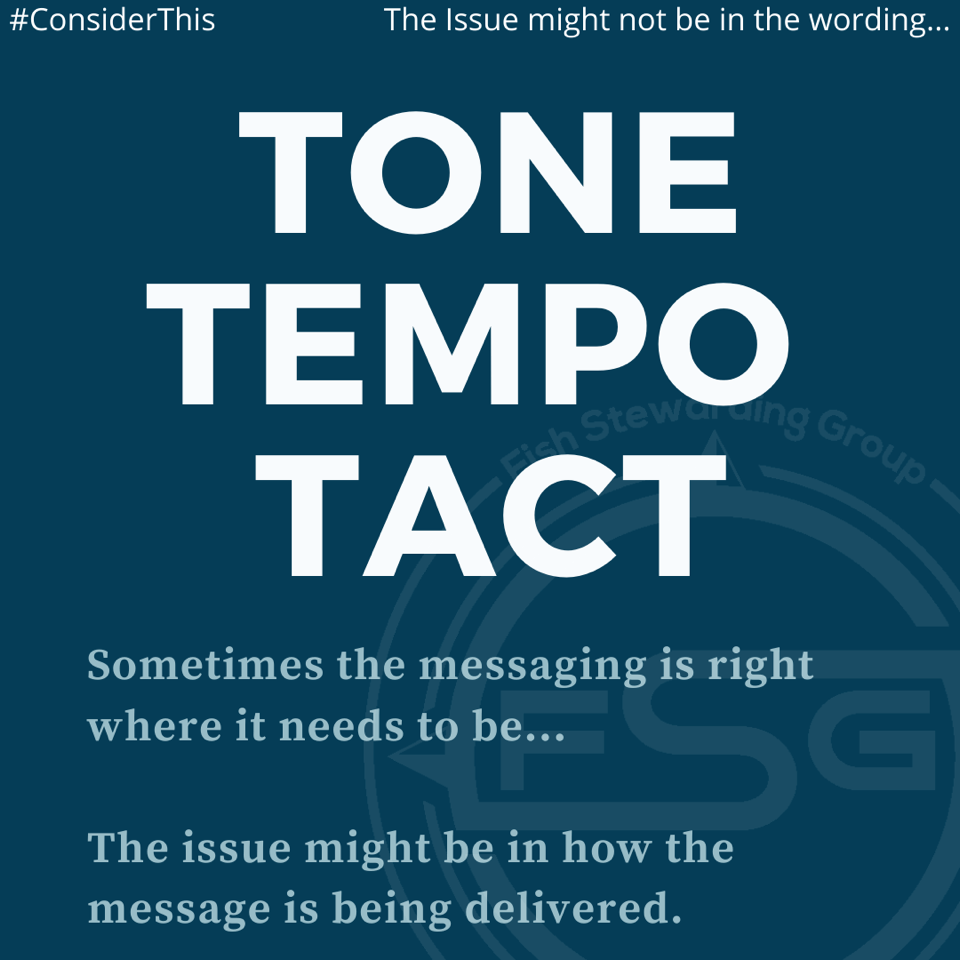
42. Sometimes the messaging and story are right where they need to be, but the issue is in the performance and delivery of that story and that message. The melody, tone, dynamics and tempo can be everything in a delivery.
43. Consider the invitation elements of your messaging in your sharing, pitching and marketing. Does it invite people to want to learn more or confuse, over making them feel like they don’t know anything at all.
44. Consider synchronizing your messaging and online connecting styles with your methodology, morals and beliefs, not someone else’s.
45. Are you network messaging or network marketing? In these times, it seems people may be more enticed by an engaging message over the usual marketing pitches.
46. The more you engage and connect, it may allow you to find that many more authentic engagements and connections.
47. When messaging is authentic, compliant and aligned, then strategically and ethically mobilized for distribution… It can cost a lot less to market and has the chance to resonate with a lot more people.
48. If you cannot get your point and your story across without using a PowerPoint, it may be time to revisit your messaging.
50. Are you selling with soul or do you come off like you are selling your soul? If people only see you selling your expertise all the time, without experiencing elements of you sharing the expertise and knowledge you have, then what reason are you giving them to trust you or buy?
Clarity, Truth and Professionalism Quotes
Top 100 Loren Weisman Quotes
51. Differentiate your opinions from facts. Honor your audience with messaging that clearly defines when you are sharing truth and when you are sharing an opinion.
52. Consider that when you state only what you can prove and differentiate your opinions from facts, it may allow you to stand on a stronger foundation over those stating whatever they want with no care for the truth.
53. In humility, subjectivity and in the ability to see a series of elements from a distance; it may help you to focus your messaging in order to create a much stronger of an impact.
54. Instead of claiming to be the answer, consider stating that you may be an answer.
55. I do not believe in my truth and I do not believe in your truth. I believe in the truth.
56. I believe an effective content strategy has to mix your authenticity, your story and your authority along with commentary and subjective opinions when sharing other peoples content.
57. Staying with statements that are still assertive, but placed in a subjective format can help in debate, conversations and communication. It can open many doors for authority, while applying humility and honor for another person’s views.
58. As a brand communications and optics strategist,
I focus on the authenticity, authority, optics, psychology and perceptions of a brand, persona or product.
59. The most effective brand messaging strategy is not to create the messaging that makes the most sense to you. It is creating the brand messaging that makes you, your brand and your products make the most sense to others.
Personal and Professional Growth Quotes
Top 100 Loren Weisman Quotes
61. If you are ready to face the fears, take the steps, do the work, be more than you thought you ever could, and attack the dream, what is keeping you? Lose all the excuses and replace them with all the reasons for success. Be the change for yourself. Commit to the dream or quit. There really is no middle ground.
62. Be the person you would do anything for. Be the person you will not let down. Could now be the time to respect yourself and your dream? Don’t both truly deserve that respect?
63. It’s time to respect yourself and your dream, both truly deserve that respect. Be the person you would do anything for. Be the person you will not let down.
64. I do not think you need to commit yourself 24/7 to building your dream. I do think you should commit to making every hour you work on your dream to be as effective and productive as possible… So you may be able to have the life you always wanted before, during and after your dream comes to fruition.
65. Motivation without animation can be a core factor in the early extermination of a vision or venture.
66. If you are working yourself to death, how can any investor feel safe, confident and secure investing in you?
67. When you treat your business or dream like a living, breathing baby…
You may make better decisions and wiser choices.
69. If your dream is all about winning an Oscar, a Grammy, an Emmy, or another award, give up and quit now! Why dream for accolades, awards, recognition or celebrity status?
Considering dreaming to learn, achieve, grow, sustain and succeed authentically.
70. I see many more successes and wins from those working to be better over those trying to be the best. Consider removing the hype, the hate and the ego in your growth to truly grow to your potential and beyond.
71. Choices made in fear to fix the moment can poison the future.
Integrity, Honor and Ethics Quotes
Top 100 Loren Weisman Quotes
72. Please stop overselling what or where you are, especially in today’s industry. It is easier now than ever to be found out as a big-talking beginner or a liar. On the other hand, honesty and transparency can be a major strength; consider using it.
73. The honor of your presentation, execution, experience, and growth can do much more for you and your career over false claims that have no substance yet.
74. Consider standing in honor and transparency whether behind closed doors or if those doors are open to the world at large.
75. Through my messaging, ideas, beliefs, faith, experiences and present conclusions…
I look to share content that represents my integrity, authenticity and authority in a stewarding approach while asking for nothing in return.
77. Are you trying to control and guide truth or are you allowing truth to control and guide you?
78. Your actions and approach with what you have may very clearly showcase to others what you would be able to do with more.
79. No one has a right to tell you what you want, what you need, or what you must have. So why let them?
80. Choose those you give your trust to carefully. Be caring; be loving; be creative. But also be careful.
Communication, Respect and Relationships Quotes
Top 100 Loren Weisman Quotes
81. I do not disconnect because I disagree with someone on something, some view or some opinion. If I disconnect, it is because of how they chose to disagree.
82. Regardless of how much I disagree with some people’s views, opinions & political beliefs… those disagreements have never created a desire for me to harm them, their family, business or home. I don’t understand how the first response is burn it down instead of building it up.
83. As challenging as it can be from businesses to relationships to anything else, if we ground ourselves in the respect to hear the other side, differentiate our opinion from proven and vetted facts, while removing the insulting and attacking elements, we have a better chance at create impactful conversations of change.
84. Amplified authentic opinions can be driven with passion while still anchored in respect for those that have a different view.
85. Looking for someone to hear you and your desired message of change? Perhaps, do not open with insults, attacks and attitude pointed at the people that might be able to help make that change.
86. Consider messaging, marketing and responding in love. Be kinder and be bigger, instead of adding to and authoring more words of hate online.
88. Demanding change and justice is worlds different from devoting time and efforts to making those changes and creating that justice.
89. Voting is a right and if you do not want to exercise that right, who am I or who is anyone to tell you that you are wrong?
90. Are they only addressing your symptoms or are they working with you to find a cure? And, do they have the knowledge and ability to assist you in the healing with a plan for the long run?
Optics, Perception and Social Media Quotes
Top 100 Loren Weisman Quotes
91. Pictures of people taken with influencers does not make them a person of influence or an influencer.
92. Consider following through with endurance over just following the latest trend, book, course or claim of the moment.
93. From the news, to social media and everywhere else, the tone and temperature in some ways, has become more toxic than the virus itself. It’s almost as if for some people, it is easier to be brutal than it is to be beautiful.
94. Stop settling for, subscribing to and becoming enticed by stupid. I believe most are smarter than that. Yet many allow themselves to continually get sucked into it.
95. Playing the blame game is stupid and childish. Even if it is someone else’s fault, the blame game is wasted time, effort, and energy that takes you somewhere that most of the time is not going to get you anywhere.
Endurance, Harvest and Long-Term Vision Quotes
Top 100 Loren Weisman Quotes
96. How you plant, where you plant and who you plant with can be some of the most crucial elements to reaping the best fruits and results at harvest for any business.
97. Consider taking an approach to your nonprofit asks by explaining what is needed, what would help and why, over telling them that if they skip one coffee here or one beer there, they can do so much more and show that they really care.
98. I believe there is no better way to find out the true heart, honor, and professionalism of a person, than seeing how they handle themselves and others when facing a crisis, disaster or intense level of pressure.
Loren Weisman Video Shorts on YouTube. A collection of 20 topics on communication, messaging, optics and topics.
Loren Weisman Video Shorts
1. The Company You Keep: Why Your Network Matters
03-06-2025
In the YouTube Short “The Company You Keep: Why Your Network Matters,” brand communications and optics strategist Loren Weisman emphasizes the importance of being selective about your professional connections. He argues that entrepreneurs and small business owners should clearly define the types of people and brands they want and do not want to work with, based on their values and standards.
This approach is not about limiting opportunities, but about attracting like minded clients and collaborators, enhancing brand authenticity, credibility, and professionalism. By openly communicating your boundaries and expectations, you set yourself apart in the marketplace and foster genuine, value aligned business relationships.
2. Why BEST Has Lost Its Meaning and What To Do About It
03-10-2025
3. How I Actually Lost 9lbs in 20 Minutes (Spoiler: Don’t Try This!)
| Exposing Clickbait Culture
03-11-2025
4. Freezing Your Child’s Credit Is A SMART Move
03-12-2025
5. What Happens To Your Business If A Team Member Passes Away?
03-13-2025
6. Staying True To Yourself In A World Of AI Altered Content
03-14-2025
7. How to Actually Communicate in Videos
(Authentic Video Communication Strategies)
03-15-2025
8. Are Outdated Experts COSTING You MONEY Every Year?
03-17-2025
9. The Moral Crisis of AI Branding: Where do you draw the line?
03-18-2025
In the YouTube video “The Moral Crisis of AI Branding: Where do you draw the line?”, Loren Weisman, a Brand Communications and Optics Strategist, discusses the ethical boundaries of using AI in business branding. He supports using AI for research, optimization, and information gathering but cautions against relying on AI to create content or personas that are not authentic.
Weisman encourages entrepreneurs to ask themselves if they would be comfortable openly sharing how they use AI with family, clients, or the public; if not, that may indicate a need to reconsider their approach. The video emphasizes transparency, accountability, and aligning AI use with personal and brand values to maintain trust and authenticity.
10. Elevate Your Link Communication with This One Simple Hack
03-19-2025
11. Do Not Let the Haters Get to You! Good Responses to bad reviews
03-21-2025
12. Are Healpreneurs REALLY Qualified To Give EXPERT Advice?
03-24-2025
13. The Truth About Popularity: Hype vs. Reality
03-25-2025
14. Can Authors Be Honest About The Role Of AI In Their Writing Process?
03-26-2025
15. Why I’m Quitting Sarcasm
03-28-2025
16. 180 Medical Made My Self-Catheterization Experience LESS STRESSFUL
03-28-2025
17. Is Your Email Or Text Going To Bite You Later On?
04-01-2025
18. Why Motivational Coaching Can Be A SCAM
04-02-2025
YouTubes New Rules Video
19. Are Online Courses Actually Worth Your Time And Money?
04-03-2025
In the video “Are Online Courses Actually Worth Your Time And Money?”, Loren Weisman warns viewers about the prevalence of low-quality, deceptive online courses often created with automated tools and marketed by individuals with false or inflated credibility. He highlights the risks of wasting money on invalid certifications and the potential damage to one’s own credibility.
Weisman advises viewers to thoroughly vet both the course content and the instructor’s real world expertise and presence before making a purchase, emphasizing the importance of investing in authentic, well founded training rather than falling for digital scams.
20. Proving Claims with IRREFUTABLE EVIDENCE
04-04-2025
In the YouTube video “Proving Claims with Irrefutable Evidence,” brand communications and optics strategist Loren Weisman urges viewers to support their claims with substantiated, unbiased, and objective proof.
He criticizes the common practice of presenting personal beliefs or secondhand opinions as evidence and stresses the need to dig deeper, thoroughly vet sources, and consider potential biases. Weisman emphasizes that true credibility comes from transparency and presenting verified facts, not just repeating what aligns with one’s opinions or interests.
Loren Weisman Video Shorts on YouTube.
A collection of 20 topics on communication, messaging, optics and topics.
*****
Honest AI Podcast Transcription Chapters:
00:00 Honest AI Will Not Replace Humans: Opening and Podcast Introduction
01:40 The Hype vs. Reality of AI in Business
03:23 Taking a Middle Ground: Not Anti-AI, Not Pro-Hype
04:26 The Wild West of AI: Lack of Standards and Regulation
05:11 Learning from the Music Industry
07:46 The Consequences of No Accountability in Tech
11:49 Five Key Points for the Future of AI
12:22 Advanced Multimodal AI Systems
13:51 Agentic AI and Autonomous Agents
15:04 Quantum AI for Specialized Applications
16:41 Industry Specific AI Applications and Fraud Detection
18:17 Why Human Expertise Still Matters in AI-Driven Work
20:18 Building Teams: The Value of Diverse Human Skills
21:20 The Danger of Shortcuts and Over-Reliance on AI
22:31 Transparency in AI Use: Authors, Experts, and Authenticity
24:54 The Importance of Expert Oversight in AI Integration
26:27 Accountability, Policing, and the Need for AI Standards
29:23 Blockchain AI: Protecting Truth and Validating Claims
32:03 Combating Fraud and Hype with Clear Documentation
34:41 International Standards and the Future of AI Regulation
37:07 Building Ethical AI Businesses
41:18 Transparency Statements
42:35 A Path Forward for Honest AI and Human Collaboration
44:17 Closing: The Call for Ethical Action in the Age of AI
Song: Wait What Really OK. With your host, Loren Weisman. This is a fully licensed theme song for the show about stuff that makes you say Wait What Really OK. This is Loren Weisman.
Loren: This is Wait What Really OK, The Brand Communication and Optics podcast and today’s title is loosely or its working title is Honest AI will not Replace Human Beings over the last and you may be hearing a little bit of wind or a lot of bit of wind, but it’s a beautiful day, it’s windy, it’s a little bit overcast where I am, and it’s just this comfortable sort of summer wind in May. And it’s nice to be outside and with some things that are happening that have kept me in bed and kept me inside. I just want to be outside and I want to share this thing outside.
So the brushes of wind in the background, they may get louder, they may get softer. I spoke to Doug Fish of Fish Stewarding Group about a week ago and he had said at one point, he said, I really think that you should do a video talking about some of the future of AI and some of the thoughts that we’ve discussed together and the trends that I’ve seen and some elements about the motion of it and the right way to use it and the wrong ways to use it. And I at first was thinking just absolutely not.
My views on the way that AI is being shared right now was so much hype and so many people stating it or claiming to state what the future is going to be, or for that matter, using AI to ask what the future is going to be, and oftentimes in a very selfish sounding way, presenting it as what they want it to be in their intention or inside of their business or inside of their needs, as opposed to the motion of where it potentially can go, where it won’t, where it can’t go, and so on.
Then just yesterday I was having a great conversation with Mark Simpkins and he’s the CEO at AWS, and we went into a little bit more about AI and he said along the lines about structuring and some of the same exact things. A conversation went on for a very long time and the structure and the ideas and thoughts that I’ve had on AI for the better part of 10 years.
And as much as people say, oh, AI is new, AI is new. AI has been around for a very, very long time. Even in some of the modules and aspects, they weren’t as strong, but they were being used. And for many years, as in many decades, it’s now a lot more known it’s now a lot more accessible, it’s now being used that much more by the public, and in some ways it’s being exploited that much more. So the goal inside of this episode, I’m not going into an anti AI rant. At the same time, I’m not going into necessarily a pro rant about it either.
I’m coming from a middle standpoint, from viewing the authenticity and the options of AI, as well as how I believe authentic, authoritative businesses can apply AI and use standards that are strong, that are true to heart, true to morals, true to professionalism and true to transparency. Now, this is not so common with how the abuses of AI are taking hold and growing and growing and growing at the same time. I’m going to throw out one of my forecasts of what I see and a couple different options on that forecast because it really, right now there is no clear path on AI. It could go a number of ways.
Honest AI Podcast Transcription Continued:
The foundation of your messaging is framed by your words, your story and your actions. Consider making them strong, true, authentic and yours.
Right now it’s continuing to move forward and yes, it’s being abused already, but because of the lack of regulation, because of the lack of understanding, because of the lack of compliance, this is the wild west that’s out there right now regarding AI as is. Jump back. Let’s jump back 20, 22 years to 2003 and the wild west of what was happening around the time of digital music. I put out in a press release, when I was part of the music industry, I put out in a press release and I got pretty heavily attacked for it at the time.
My thoughts on what I saw happening with the downloads, what I saw happening when you with Napster, what I saw with the early forms of itunes, and there are many people that put many predictions. I think that if you’re going to put out a prediction, if you’re in the business world, if you believe and you can justify what you’re saying and you stand by it, put it out in a press release.
Put it in a genuine press release, not something you call a press release and put for immediate release now and some kind of crap on Twitter or X, but more so through a series of different channels so that people can find this stuff. A year, two years, five years, maybe even 10 years down the line of what you said. It’s almost this blockchain and I will reference AI and blockchain in this concept a little down the line, but it’s almost like a blockchain approach of proving and bringing the validity of what you stated and showcasing.
You genuinely stated it as opposed to being in a group of people 20 years later. Saying no, I said this was to happen. I said, oh, when and how can you prove it? Did you write it in your book? Did you put it here? Did you put it there? Can you back that up? What I said a number of years back and I said it when I was tied to a digital download company, one of ethics and one of independent considerations for artists.
I remember that release went out on. It was March 3rd of 2003, and there were a couple releases that went out just short of the release of this company and its product. And then a couple weeks afterwards, I don’t remember, I think it was the one before stating, the music industry is about to go undergo a massive change and here’s how it can potentially harm the artists. I wasn’t worried as much about Napster
.
Honest AI Podcast Transcription Continued:
My viewpoints on Napster and the way that was being done was, hey, we’ve had plenty of chances to set the regulation and the compliance when it comes to copyrights, when it comes to publishing, when it comes to licensing, there were for many years things were being brought up going all the way back to Motown. And even before this goes all the way back to when opera was being pressed on vinyl and people were taking over. I mean, even mobsters taking over and forming some of the initial distribution companies and making money with no consideration to authorship or who had the rights to a given piece to when something became open use, so on and so forth.
Go even back to the time when some of you may not be as old, but you go into the Chili’s or you go into the Fridays or you go into the Applebee’s. And for many, many years they had to sing their variation of Happy Birthday because they didn’t have the rights to sing Happy Birthday in their given restaurant. But this is not to get off track. But this still does kind of relate.
I said the music industry was going to have a massive nosedive when it came to profits, the understanding of profits and the distribution of profits. I estimated that in a number of years, probably about a decade, that artists would after that start selling off their entire catalogs to get whatever value that they felt. Because the royalty systems with digital downloads, with different forms of digital distribution and the issues arising with physical distribution would make it no longer worth collecting that royalty check, but more so just selling out the rights entirely. And as we’ve seen, major artists across the board have sold off their catalogs.
Money has dropped out of the bottom. People that say, oh, I get this for streaming, I get that. Some, yes, they’re making it, others, they aren’t the music industry had an opportunity. And I get that AI goes beyond music, but the music industry from a national standpoint, from an international standpoint, there was the opportunity to meet, to discuss, to plan, to organize. Even before all the digital stuff, as the digital stuff happened, as it went even.
But the lack of accountability, the lack of organization and the excess of people bitching and moaning and complaining about what was wrong as opposed to coming together to figure out how do we make it right was not being put together. We were not, you know, we as an industry, I’m not part of it anymore. We’re sitting here saying we’ve got all these great ideas how to make artists money and yet no one was coming into stating where do we set the commissions, where do we set something where we could start it on a county level, bring it to the state, bring it nationally, bring it internationally,
How do we set these standards?How do we set these standards with distributors?How do we police this, how do we discipline this?
Small little elements were set up. But still to this day, the music industry has become even a bigger crapshoot. If I was starting, I mean, I started in the music industry in 92, if I had to start in the music industry today, I wouldn’t have gone into it. I went into the music industry in 1992 as a drummer, seeing the opportunity, seeing in some ways a lack of opportunity and knowing that as being a drummer there was work. I don’t think I would have gone in as a guitar player. I saw the business side as much as I saw the creative side.
We are in a similar wild west situation. This has been growing, it’s been building, it’s been building up. There’s been some jumps in the last five years, even in the last 10 years, we begin to see these companies saying they’re AI, you know, they’re creating AI modules, they’re creating AI businesses, AI consulting firms, AI this, AI that’s. And yet is it being done in a manner that truly brings a level of authentic, organic, authoritative expertise. AI has all the potential in the world to be something so incredibly strong.
At the same time, it has all the ability and has become in many circumstances something that’s absolutely evil, deceptive, plagiarizing and creating these false prophet type self proclaimed experts that claim to know everything because of a ChatGPT prompt where they’re going in and learning little ways to trick, fool and deceive audiences into paying them. That part I can’t stand.
I want to jump to the five key points I see of the future of AI, the stuff that I see happening by 2030. But at the same time a lot of questions of what’s going to happen in the next two years, in the next three and four years. I think the advanced multimodal AI systems, those are going to continue to grow now. Those are that kind of, you know, they deliver the hyper personalized experience.
This can be again a great thing subjectively. At the same time it can be incredibly dangerous. Okay, you want to for parody, you want to for leisure, you want to for fun create some picture where you’re sitting there holding hands with Taylor Swift or you’re presenting yourself, you know, or you’re presenting yourself on a, as an animation or you’re doing something of just fun, something you might send around to a couple different friends, something that you might post out there and say isn’t this funny? Something that you would put out there but you wouldn’t lie about. That’s some of that multimodal AI.
Honest AI Podcast Transcription Continued:
It’s these hyper personalized experiences from the audio, from the visual, even a touch of it going into broader experiences in the text, elements of what can be put together. Now the bad side of that and the bad side of some of these other ones.
Now somebody puts an image of them up on stage speaking to an audience that’s not there, claiming to be an in demand keynote speaker when the only thing that they’ve done is speak to their camera or you know, or gone to one of those local little, you know, meetup talk things where everybody gets seven minutes to speak. I have a problem with that. I have a problem with some of these AI photo generators where it’s make your headshot that much better.
Okay, so some nuancing in editing a photo, colors, lights, this and that. But when you’re really starting to overly enhance and then presenting a professional version stating this is me. Where is the line in the sand where this is deception to this is true. There’s also the…
Agentic AI and the Autonomous agents.
Those are where you’re starting to see and it’s been especially stronger in the last couple years of the personal assistants being able to come out, the therapists. What I found too, and it’s been a little bit of an issue for my field and some of the people I work with, the strategic advisors that now you can format this thing and say what would be this person?
Or give me the answers of this person, this person and this person, what they would say regarding this business. Like okay, these again are giving you Ideas. But are they giving you the right ideas? I’m going to jump back to that in a bit.
The parts of AI that I find the most exhilarating, the most innovative and the most helpful are the last three, the Quantum AI for the specialized applications. This is that complex problem solving, the stuff that can help a cryptography, material science, drug discovery. The way that you can use quantum, you know, this quantum computing in a much faster method where you’re using a series of absolute, objective, substantiated numbers, facts and information and you’re compiling that data and making it that much easier to read, to review, to organize.
This is the place where it saves hundreds of hours and many, many different researchers. You’re still going to need those researchers. And I’ll touch on that in a bit. But such a way to scan and learn in this quantum scale is absolutely amazing. And it goes into the reasoning and the frontier models where again, mathematical elements, these further out scientific elements, law.
I mean really to have all that information, all, you know, pretty much every true law case, every updated law case, everything in the books there to be able to cross reference in that way, it brings it to a new level. And lastly, the industry, specialized AI applications. And this is where I think that it needs to go with AI businesses specialized into specific areas.
One of the first ones I like the idea of, and that is growing is fraud protection, I’m sorry, fraud detection.
And that fraud detection I think should be, as this part and module grows, that it’s building as much for AI to be able to identify some of the AI characteristics.
Was this, was this just a simple prompt?Is this person stealing from here?How is this being done?
But also when you go into medical, when you go into finance, when you have these abilities where you could run somebody’s information, you know, their entire medical history and again, as long as they were telling the truth, being able to have all of that together and then not make a decision based on that, but then have the right doctors who receive this data, using that to come to a preliminary conclusion, preliminary assumptions, you know, this, these preliminary thoughts.
And maybe together then from that data, bringing it back into the AI module to say, okay, from what was asked, from what was gathered, from what is in the discovery, now this information has been returned with this information. These experts, these doctors, these scientists have viewed it as this, are asking about this, are concerned about this, see this as this, what are your thoughts on that? So it becomes this series, this give and take. And that to me brings authenticity and authority through the roof.
Honest AI Podcast Transcription Continued:
Now take a Step back into what I was saying before about the researchers or the strategists.
Yes, There are a whole bunch of people out there that are stating they’re business experts because they can run a check or they can run a prompt, or they can run some kind of advanced prompt, or they took one of these thousands of AI courses. And the awful thing is there’s so many people out there creating AI courses for pennies on the dollar to try to make whatever they can make, and yet they have no idea what they’re doing. And then they’re getting conclusions off of algorithmic learning.
They’re getting summaries, they’re getting answers that can be an answer from what data was captured, but they may not be asking all the right questions for the particular situation that they’re in. And their lack of expertise in analyzing that data, in knowing what questions to ask, in knowing what red flags to raise, that’s where the problem runs in.
That’s why I think that honest AI will not replace humans. I see it with a formidable, foundational, authoritative business, or even AI business, from anything from strategy to doctors to finance to fraud detection. It still includes having a core group of experts, people that have the experience, people that have the experience in the given field, that understand communication, that understand compliance, that understand the law.
Then you have the outer team, which would be the individualized group. Okay, say you were, you know, you were working, or let’s say, for that matter, I was consulting with a team on a business located in, I don’t know, we’ll say, Las Vegas, Nevada.
Honest AI Podcast Transcription Continued:
I’m going to step in as the communication and optics guy, the person looking at the messaging. I’m going to look at some of the comparative, the competitive, the intention of the perception, the psychology, the experiences that I’ve had in music, in tv, in many businesses around the world. I’m also going to look to people that understand business on a different, on a different note, people that understand building, people that understand exit strategies. For this particular thing, I’m going to want to bring in team people that are right inside of Las Vegas.
Are they looking investors? I’m going to want the right people to review investments. Now in that from a discovery, getting as much information together, and that’s something I’ve been doing for more than 10 years, is the initial. It’s the initial brand messaging and communication discovery.
It’s a lot of information in the beginning. And in that, from that data, we’re able to compile and come up with a plan of action or an investment plan. Or a business plan or standard operating procedures.
Now, in the same way, when it comes to AI, if you are not creating that initial discovery first before entering everything in there, you’re cutting corners and you’re getting answers that may not apply to your type of business, where your business is located, and many of the parameters of how much money do you have, how much money do you have access to, what aspect of reputation, what comes to land, what ties to real estate, what ties to so many other variables that are oftentimes not thought of.
And then you have that single little AI self proclaimed expert. He doesn’t worry about any of that. He’s just popping in. I want to build in Vegas. I want to do this, I want to do that. I need this much. Tell me how to do it. Give me a business plan. People are writing business, but people are writing books. I think that part is absolutely pathetic.
If you can’t inside of this, if you can’t state how much AI you use inside of writing a book, I think there’s a problem there. It’s fine to state, you know, maybe you put on the back. I used AI to help me proofread. I used AI as a technical editor. I used AI to do this. These are the kind of things, and I believe authentic, true authors putting that out there can help stand out, whether they’re choosing to go to a major publisher, a hybrid, or even self publish against some of these awful. And I can’t believe that they’re allowed to continue to advertise online.
Honest AI Podcast Transcription Continued:
But that’s the state where we are, that’s the state that we’re in. All you have to do is come up with these 15 prompts and AI will write a book for you. And then you can say you have a book and you’ll look like an expert, you’ll look like a plagiarist.
And yet that stuff is out there, advertised. Have you noticed so many of the ads out there or appear as an expert even in some ways, some of these AI fraud companies and realize they can’t make you an expert, but they can make you appear as one. I believe we have to admit we have to be transparent in what we use AI for, in how we use it, and in that transparency, in that authenticity we can draw. It’s not going to be everyone because there are a lot of people that want a shortcut.
There’s a lot of people that don’t care. They want to do whatever they’re going to do to make their money to grab that client and have no concern whatsoever they’re putting into the little legal elements. How do I create this contract so that if it all falls apart, they can’t come back and sue me? As opposed to, why don’t you work on your expertise so that you’re not going to screw them?
I mean, of course you want an aspect of not being held liable for what a client may have done, but it goes too far now. I mean, my thought about where this can go when you have an AI organization or organization that uses AI in this authentic way is that it’s going to be amplified and furthered with true human expertise. You know, you look at some of these organizations and like this is a top notch organization. There was a given, a higher level consulting firm that has been, has been saying, you know, we use AI and they’ve stepped away from sharing though the expertise, which I don’t understand.
They step away from sharing the expertise of these individuals, the experts that are around them. It’s not just using AI. The cornerstone of all of this, the foundation of all of this to me is the expertise using AI. Because as AI grows from an authentic, from a transparent, from an authoritative standpoint to truly steward, to truly grow in some of these areas that are not as clearly objective, where it’s, you know, too many different parameters, you’re going to need the experts that are going to have to know how to ask, how to look.
Some of these law firms right now that are getting sued because some of the paralegals are cutting quarters, not researching, not looking through, they’re asking the wrong questions into AI prompts, getting back simplified answers, giving that to the partners or the attorneys. And unfortunately then the attorneys are using that saying, okay, well they did the work, they found it, they’re quoting where this is, okay, great, let’s go. And they’re getting in trouble, they’re even getting fined.
And it’s one of the steps I’d like to see with AI. I’d like to see an accountability, I like to see an element of discipline, of fines and for lack of a better word, policing. Because if that’s not in place, then the crazy side of AI just gets crazier. I know that there’s no way presently, and even if some of this stuff comes into play, that you’re ever going to be able to stop the fraud.
The frauds have been there forever and they’re going to pull their games and they’re going to create things and they’re going to screw people over. That’s going to continue. But we can set a standard for those that are prepared to look a little bit deeper, for those that care about their businesses, for those that care about their information to set in place.
Say, Here’s how we operate.Here’s how we operate with AI.Here’s our AI Statement of use.This stuff can go up on websites.This stuff can go to companies.
This could be an internal thing stating back to, you know, stating back to that paralegal that, you know, they come in, or even. Or even a lawyer if you use this stuff and you have not checked those links. And it’s. It’s funny because sometimes AI will send you back links, you know, in a given prompt, and it’s dead. It’s not true. And it’s not that AI is trying to fool you, but are you asking the right questions? Are you vetting the materials that you’re coming back to see if that’s information that can be compiled correctly, or are you just taking it at face value because it’s AI? I’ve done some, you know, some people say, google yourself, you know, AI yourself, ask some really broad questions.
According to AI, I’ve done a lot more albums than I actually did, and it’s absolutely not true. I know how many albums I did. Now, there are articles out there from magazines, from stuff of when I was in music that have stated higher numbers that were not true. They weren’t shared by me, but they were put out there. And yet that was where some of the scrape came from. Now, one of these articles, as it came through, boom, it goes up. It’s viewed as this. It’s compiled here. Now it states X. But it’s not true. AI doesn’t know that.
When we compile information, if we’re not vetting it, we’re not honoring the opportunities of how great this research can be.
We’ve got to test this. I mean, even. Even having peer reviews inside of AI, I don’t think is a bad thing. So in that, I mean, in that clarity, that to me, is stronger. Now, coming back to what was said before, I don’t know what can be done about the lying elements. It is frightening. The videos that can be made, the images that can be made, the things that can be said. And in that, it’s got to be. It’s got to be something where your defense is not coming off defensive.
There’s a letter, a letter I’m putting out. It’s on a private matter. And I’ve thought about it going like, wow, how could that get twisted? How could that get blown around? How could that get messed up? So the letter is going out as. It’s an audio letter.
Honest AI Podcast Transcription Continued:
It started as an audio and the audio is being placed in one area and in a file. It’s also transcribed on a back page of my website. That is not optimized. It’s a, it’s accessible. Not, not like, not, not like password secured, but you’ve got to have the right link to find it. And it’s also printed out having certain elements like this to potentially prove that if someone was to take something proprietary of yours and slightly adjust it and then claim that that might be a step that we may need to take.
That might be a step in secure documentation and proof down the line at the same time with major things that you’re putting out there. Maybe it’s making sure you’re putting it out there in major places. Returning to that point, this point being blockchain. I am a big fan of the blockchain.
Not, not the cryptocurrency aspect. It’s much more so the blockchain.
I believe that with, with information that is not just on one given server right over here, but it’s found and dated and clarified that it shows up on all these servers and all these different places. And then at the same time with the blockchain security, some is, some have advanced to this, some it’s still waiting to where somebody makes a change and then something is pinged going, no, that’s not right.
Because here’s 30,000 other servers, computers, whatnot, stating X.
And it was dated to, you know, June 2, 2023. And all of a sudden something’s been put out and it’s that exact document. But now it’s had some massive changes and these are wrong changes that, hey, this came a year later and this has been edited, this has been adjusted, this is off, here’s the original. I think that that’s a great level of protection. We’re looking at some of these places that are dealing in real estate holdings overseas in certain not as strong countries where people have contracts for land, for homes, for businesses. And you have people that go in and say, okay, we’re going to take these things over. We’re going to burn down a bank, we’re going to burn down a building. We’re going to make sure to shred these given contracts because there aren’t really copies of them. On the smallest level internationally, that could be of assistance of going, okay, this goes away.
At least it’s located elsewhere.
But on the largest level it’s not just elsewhere, it’s so many different places. How can we begin to use aspects of AI and amplify the authenticity and the authority of an individual? What they wrote, what they found, when they found it, and that being backed up enough so that it’s in tens of thousands of places and then add on to that the security parameters that when somebody puts that up.
Here’s your plagiarism detector or here’s your alteration detector.
This study was putting out, I mean these third party studies and like you know, a couple years ago I was speaking at the Miami, it was a Miami Cannabis Expo, it was for CBD. And I stood up in front of a crowd and I said, you know the number one problem with this industry right now, it’s not the people, it’s not, it’s not the distributors, it’s not the sales system, it’s not the government. I said it’s you. It’s you people that are trying to falsify, trying to hype and trying to shortcut these people saying oh we have this great third party tester and that third party tester ends up being a lab that they own that they’ve just structured under a different business. But accidentally it ties back to their business.
These elements where people just shortcut for hype. It doesn’t help them. But when we come to this clarity, we come to this vetting. I’d love to see inside of whether it’s the quantum modules or, or you know, getting, getting back to the advanced multimodal and, and these elements of fraud detection where things that are coming up where it’s the, you know, not, not just the response of the community notes of well this is this. And somebody found one other thing to object it and then all of a sudden they’re changing it.
I don’t want you to find one other thing to object it.
It could be subjective. I want you to find 30,000.
You find a document that says X, you find a picture that has been altered, that then all of a sudden this picture on the blockchain on a number of, you know, a number of different websites too that we have scans going across social media scans going across different. Our existing search engines, new search engines, showcasing.
Click down here to see the backed up documentation of what is there now. Of course things can change. Study, you know, new things can be learned. But who’s making those changes? That’s one thing. And that can be an edit on the other side of it.
Honest AI Podcast Transcription Continued:
Is someone trying to abuse this, okay, the pill that’s Hard for some people to swallow. And kind of coming around the last couple laps here is the policing. I’ve talked to a lot of people inside of AI or that are interested in AI and they’re like, I don’t want the policing, I don’t want the government policing. I don’t want people, you know, saying this. I don’t think somebody should be fined.
I think you’re wrong. And here’s why I think you’re wrong. I think that without that policing, without that accountability, without the liability, without the discipline, it leaves us to be the wild west, just like it was in music, but on a much bigger scale and affecting many, many more people.
I’d like to see on, you know, on a state, on a state level, on a national level, and even on an international level, whether it be some kind of board, commissions, councils, getting something set up in stating, here are the parameters that we’re going to look toward and not something that’s going to take, you know, five years to build something of. Okay, here is our initial committee, Here is what we’re going to grow it into. Here is where we’re going to vote into these elements.
Here’s what we’re going to come to agree on when it comes to AI and then setting this, is setting certain standards on an international level. And that if there’s certain countries that don’t necessarily comply with that, that, okay, you’re using this module, you’re using this, you don’t know that this is absolutely safe. It’s come to a time that if we’re not taking that step to have some kind of discipline, to have some kind of, for that matter, punishment for doing wrong, then they’re just going to keep taking advantage.
And the people that are doing right, I believe, should be rewarded. Here’s a, you know, here’s this, here’s their AI statement of use. Here’s how they’re doing that, here’s how they’re backing up, here’s how they’re walking through what they build, how they build it, how they prompt the experts that look at this, here’s our process, here are the experts that look at the data with expert eyes and have the expertise to go back and revamp the prompt or use that information in the best way for whatever given industry, that to me, becomes so much stronger. That’s your AI. To me, that’s your AI ethical business.
It’s building businesses with the right people and the right teams for the best data. And the only way that you’re going to get the A optimal effect of AI as it continues to grow into these new modules, into this expanded element are going to be by having those people that know how to ask the right questions and not just taking these AI things of, you know, take my 90 day AI course, you’re going to learn all these different prompts and all these words to use and all these things not to, and here’s how you apply it. And then you can launch your business in 90 days and you’re up and running.
No, the differentiator there inside of whatever the market is, whatever the trade is, that you have the right people doing the discovery first, that it’s AI based research that still can also be mixed and vetted with actual research too that sets for a discovery that gets the baseline information about a new thing, re establishing an old one, whatever from all that data.
Then to be able to say, okay, What are you trying to do? What are you trying to accomplish? Where do you take this from?
You know, to this next step. And from the data that comes back going to the expert or I’m sorry, the experts again that run through that data, that strategically look at that, these supposed strategic consultants, they’re popularized answers that don’t always relate.
And it’s something that I’ve even seen, you know, a tick down in people going, oh no, I don’t need your help. I’m, you know, I’m using AI and of the people that have gone that route, I’ve watched a lot of mistakes being made that’s in the, you know, the, the agentic AI, the, the autonomous agents. Oh, if you just ask the right questions and here, and here’s a whole bunch of questions you can ask.
Yes, but you don’t know or have the experience that I have to ask the questions to ask a wide array of here. Oh, and you can even ask in there. You can ask for someone like me, someone like another expert that you like, some larger scale name. But what do you find? Are you only getting some major popular answer that doesn’t relate to you? Okay, it’s a high level answer. It’s been found in a couple different places under a couple different examples. But still it’s popularity response over authority response. It’s an impersonalized response. So I know I’ve kind of gone a little bit, a little bit all around the map here when it comes to AI.
To summarize it up a little bit as best I can.
To me, the most effective business model and some of the most effective businesses for AI are still going to at the root of them have to have experts. And for these people that are doing their little 90 day AI courses and prompting off of what they think and not having the humility or the understanding that they may not be getting the type of data that they, they might get the base data and they might get popular data, but it might not be personalized or applicable or really, for that matter, professional data that applies to whoever they got to hire them.
That if you’re going to start some kind of AI business like this, and even if you want to start one of these, that you’re bringing in the experts to review this, that you’re looking at the questions, that you’re taking every experience inside of AI and not trying to put it into a template, simplified system. The exciting part about AI to me is that it will continue to grow to collect data and information.
How that data is collected and that information is formatted is crucial.
And the laws and the regulations that step in, that’s even more crucial to ensure that something is designated as, okay, this is an opinion, this is a fact. Here’s where it’s backed up here, here’s where it’s backed up there. The elements of getting into the fraud detection, the elements of these blockchain like elements of stating, this is found in this many places. This was adjusted, this was adapted for someone to put out certain stuff that it has to tie back to them. And then lastly to the individual’s responsibility or the company’s responsibility to state, this is how I use AI and this is how I don’t use AI.
This is where I apply things, this is where I don’t apply things, this is where I set the standard, I believe that that should be laid out. So even regardless if you’re parody, if you’re just doing it for fun, that it’s clearly stating there. And some of these AI, you know, the graphic things, these modules, where it’s clearly stating, okay, you threw a couple words, you know the music ones. You threw a couple words in and you create.
And a song was created off of a couple words and a couple chords. Are you really going around saying, I wrote this for you, or can you be a little bit more honest and say, I used this thing and it helped me create this for you together. In our honesty, in our authority, in our integrity, in our transparency, AI has an opportunity to be something so amazing, just as it has the opportunity to be something so incredibly dangerous.
And while AI to a certain extent, and these personal assistants and strategists and whatnot, these fake things that are just compiling off of different information can be dangerous. I still believe the honest use of AI will not replace the human beings and that we may end up seeing in these next couple years. In this surge right now of people claiming to know things they don’t know is businesses that end up falling apart because of bad decisions made based on bad information or partial information or incomplete information or information that was not vetted and checked by experts.
If we take AI to these next levels with ethics, with transparency, with regulation and policing, I believe we can get amazing things from it. Amazing new businesses, things that can be formed faster, quicker, more affordably and also correctly.
But in that it might not be as. I mean, and in the affordability, it might not be as cheap because it might still take more than one guy, you know, plugging away prompts at his computer. I know this is a little bit of a ramble and a rant, but I think this is an important thing. I think this is going to be a topic that is going to be on minds for the next number of years to come.
I think that it’s important that we begin to take these steps to get these committees into play to figure out, you know, who’s going to set the regulations, that it’s not another situation where just let whatever’s going to happen happen, because it’s already dangerous, it’s already impacting people. We can do better as this new and better technology continues to grow.
And if we do better,if we do honorably,and if we treat this in love, in honesty and transparency,I believe AI can be somethingso much greater,so much bigger,but still standin a foundation of truth and authority.
This is Loren Weisman. This was a long one, a bit of a rant. That’s all I got.